

Italy continues to demonstrate its growth potential despite global economic challenges. According...
Is it true that when more technology is distributed, there is more progress?
The central question, in reality, is whether technological progress is truly synonymous with development. That is, whether technological advancement actually leads to overall improvement in society.
This involves questioning how technological innovations impact various aspects of human life and civil society, such as the economy, education, health, and the environment. It is important to consider whether such advances contribute to equitable and sustainable growth or whether, conversely, they amplify existing inequalities and even create new social challenges.
Indeed, it is often thought that the benefits of technological progress are limited to a small circle of individuals or nations rather than promoting an improvement in the quality of life for all.
What future are we interested in living and doing business in?
The choices that governments and companies (especially those in the tech and IT sectors) are making today profoundly influence the future, gradually shaping the world in which we will live and work.
Every decision we make today, both individually and collectively, has the power to shape the course of future events. It is therefore essential to consider the kind of society we want to build, reflecting on values such as equity, justice, and social and environmental sustainability. Let us ask ourselves, for example, how the direction we take in our business can contribute to a desirable future, where progress is not just synonymous with technological advancement, but also with improving the quality of life for all.
Clearly, such a reflection requires a long-term commitment; otherwise, it is not possible to develop innovative solutions that respect the environment and promote social well-being.
As a company, we strive to embrace a model that integrates sustainability and social responsibility into our strategies, recognizing that economic success cannot be separated from the well-being of society and the planet.
This means reducing the environmental impact of operations and investing in practices that create value not only for shareholders, but also for employees, customers, and the communities in which the company operates.
Hidden risks in technological opportunities
The opportunities offered by new technologies are immense, but we must not underestimate the hidden risks that can arise from their use. Examples include the potential for job losses due to automation, the compromise of personal privacy through data collection and analysis, and cybersecurity threats that can jeopardize sensitive information.
To effectively address these risks, it's essential to incorporate a great dose of humanity and awareness into our technology strategies. This means adopting an ethics-centered approach, promoting the responsible and informed use of technology.
Businesses and governments must collaborate to develop high-level policies that protect individuals and communities, ensuring that the benefits of technology are equitably distributed and that their applications do not compromise people's dignity and safety. A collective commitment to a more humanistic vision can help reduce the risks associated with technological opportunities and thus build a more just future, where technologies serve to reduce inequalities rather than amplify them.
True progress, therefore, lies in choosing to focus on human innovation rather than technical innovation. This is because human innovation includes developing an open and adaptable mindset, capable of embracing change and exploiting the opportunities offered by emerging technologies. We therefore promote an education that provides digital skills, but also encourages critical thinking, creativity, and resilience, preparing people for managing the ethical and social challenges that may arise with the adoption of new technologies.
Long-term vision
After this reflection, it becomes clear that companies should look beyond immediate profit, developing strategies that ensure their long-term social sustainability.
Such strategies must include planning to address potential environmental, social, and economic challenges, anticipating possible futures and then attempting to at least partially manage them to ensure the company is resilient and competitive in a constantly evolving world. In practice, this can begin with the company's internal organization. One example is what Professional Link did with the Eulero Project , which Andrea Ferlin, the company's CEO, summarizes with these words:
This includes creating value for all stakeholders and supporting profitable projects that also contribute to the well-being of society. We therefore carefully evaluate the impact of our investment decisions, ensuring that the resulting benefits are equitably distributed and that our business practices are transparent and responsible.
True development
True development isn't achieved simply by allocating more technology, but by distributing its benefits equitably. This approach aims to ensure that the benefits of technology are accessible to all, reducing inequalities and promoting truly sustainable and inclusive progress.
Simply deploying technology does not automatically guarantee genuine progress. It is crucial to consider how this technology is implemented and used. The key lies in adopting a holistic approach that not only disseminates technological tools but also promotes the education and training needed to use them effectively. Only in this way can we hope to transform technological potential into true social and economic progress, one that takes into account the needs of all communities and not just a select few.
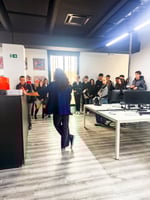
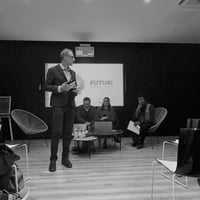
 We talked about these topics on February 20, 2025 at the AnthroDay event
*World Anthropology Day is an initiative promoted by the American Anthropological Association and launched in Milan starting in 2019 by the Master's Degree in Anthropological and Ethnological Sciences, the Doctorate in Cultural and Social Anthropology, and the Doctorate in Intangible Cultural Heritage in Socio-Cultural Innovation at the University of Milano-Bicocca . It is organized in collaboration with the Department of Languages, Literatures, Cultures, and Mediations at the University of Milano Statale, the Department of Humanities at IULM University, and the departments of Cultures, Politics and Society and Philosophy and Educational Sciences at the University of Turin.